Fire protection guides for building owners
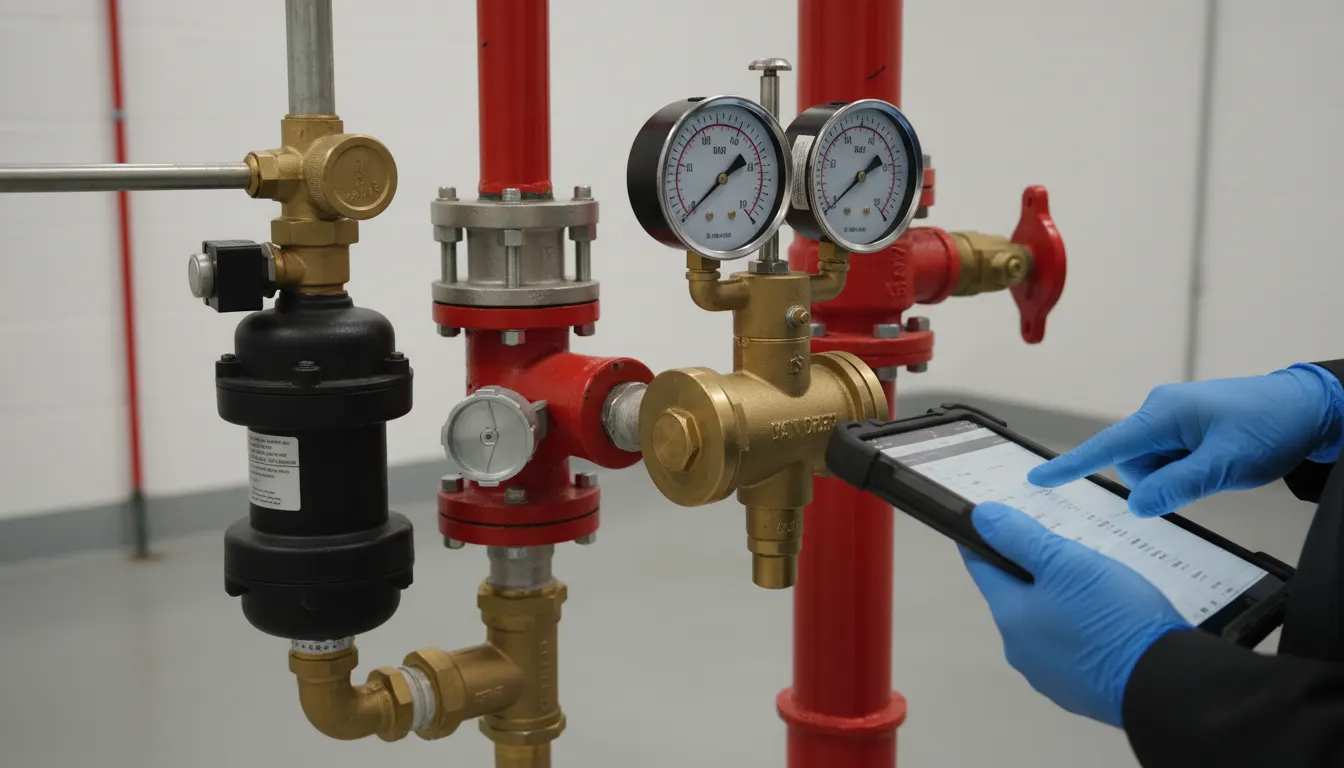
NFPA 25 sprinkler inspection schedule: what gets checked, and how often
Most commercial wet-pipe sprinkler systems need a quarterly inspection, an annual inspection and test, and a five-year internal check, with some items looked at monthly by the owner. The building owner is responsible for making sure it all happens.
Read the guide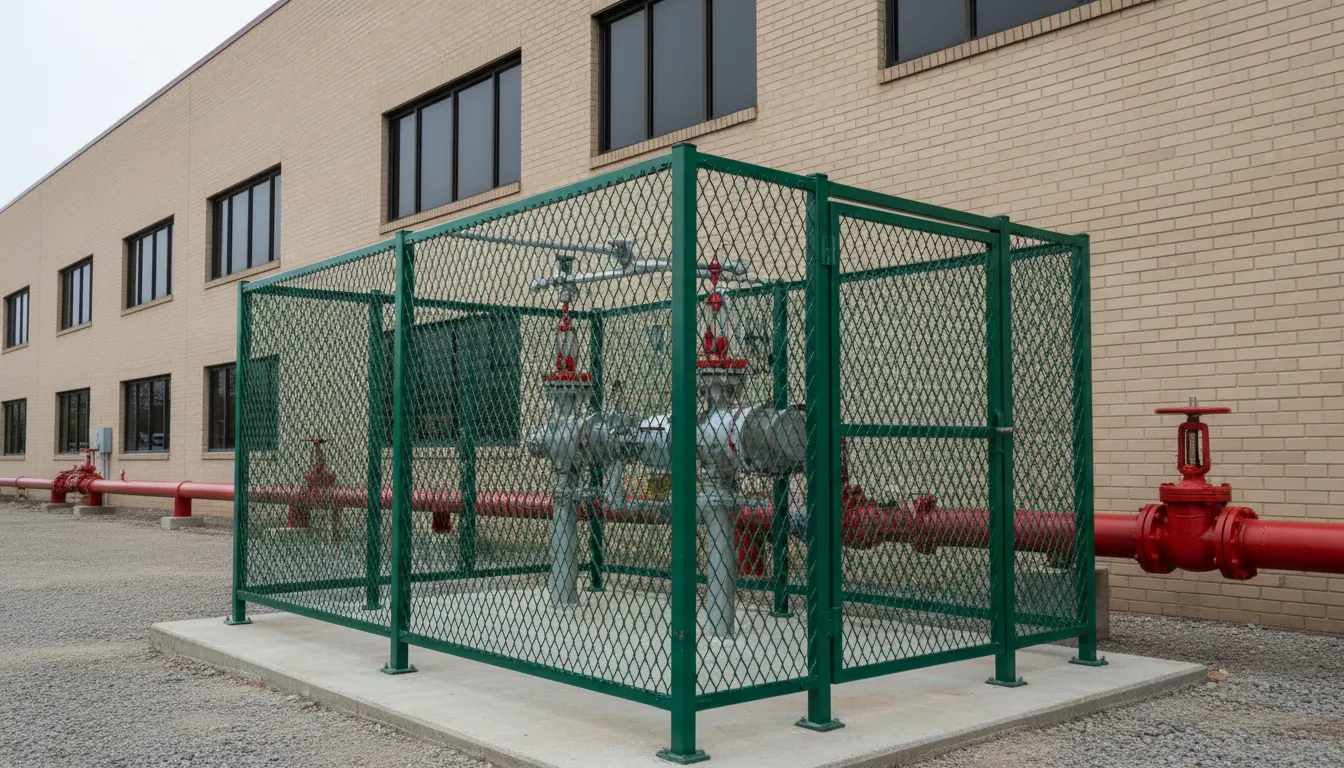
Backflow testing on fire sprinkler lines: who requires it, and what it involves
If your fire sprinkler line has a backflow preventer, your water utility almost certainly requires it to be tested once a year by a certified tester, with the results sent to them. NFPA 25 also asks for an annual forward-flow test of the same device.
Read the guide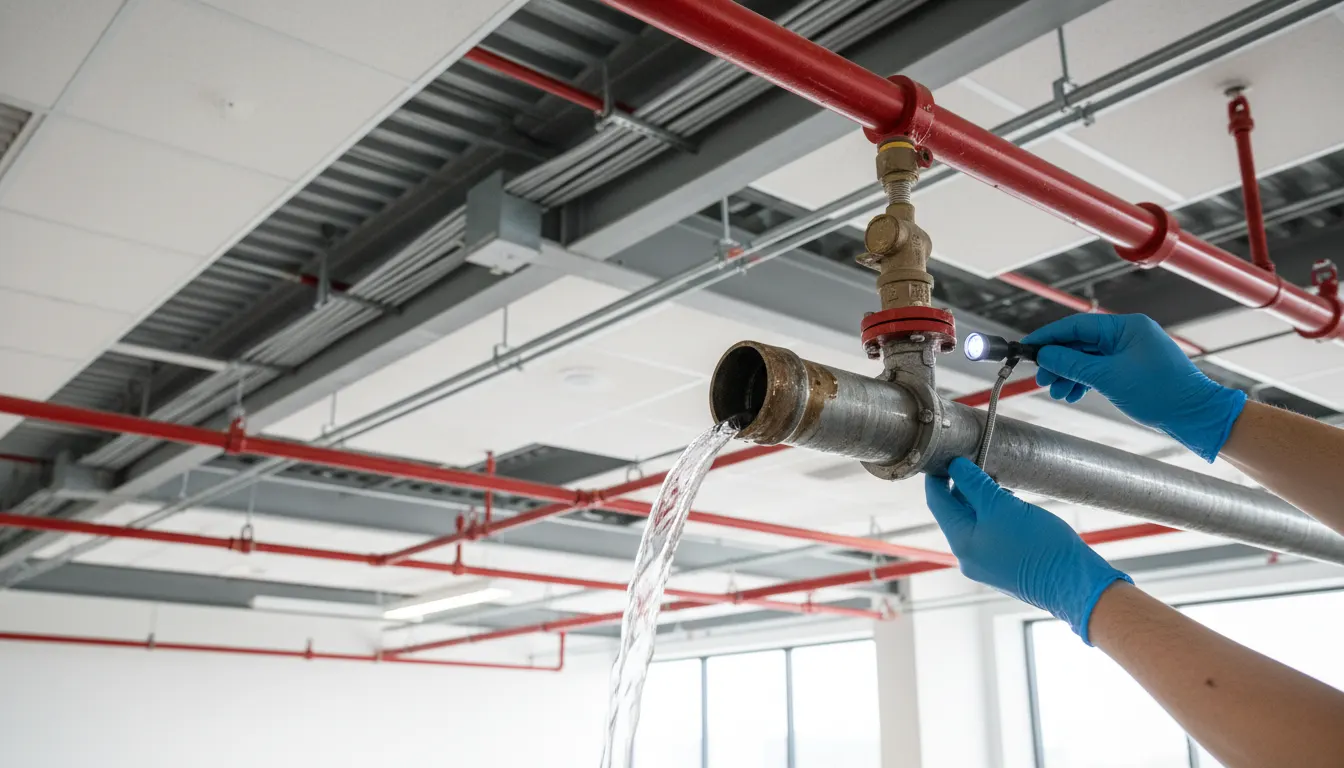
The five-year sprinkler inspection: internal pipe check, gauges and obstructions
Every five years, NFPA 25 asks for a look inside the sprinkler piping for corrosion, sediment or anything else that could block water, along with new or calibrated gauges and an internal check of key valves. If debris turns up, a fuller obstruction investigation follows.
Read the guide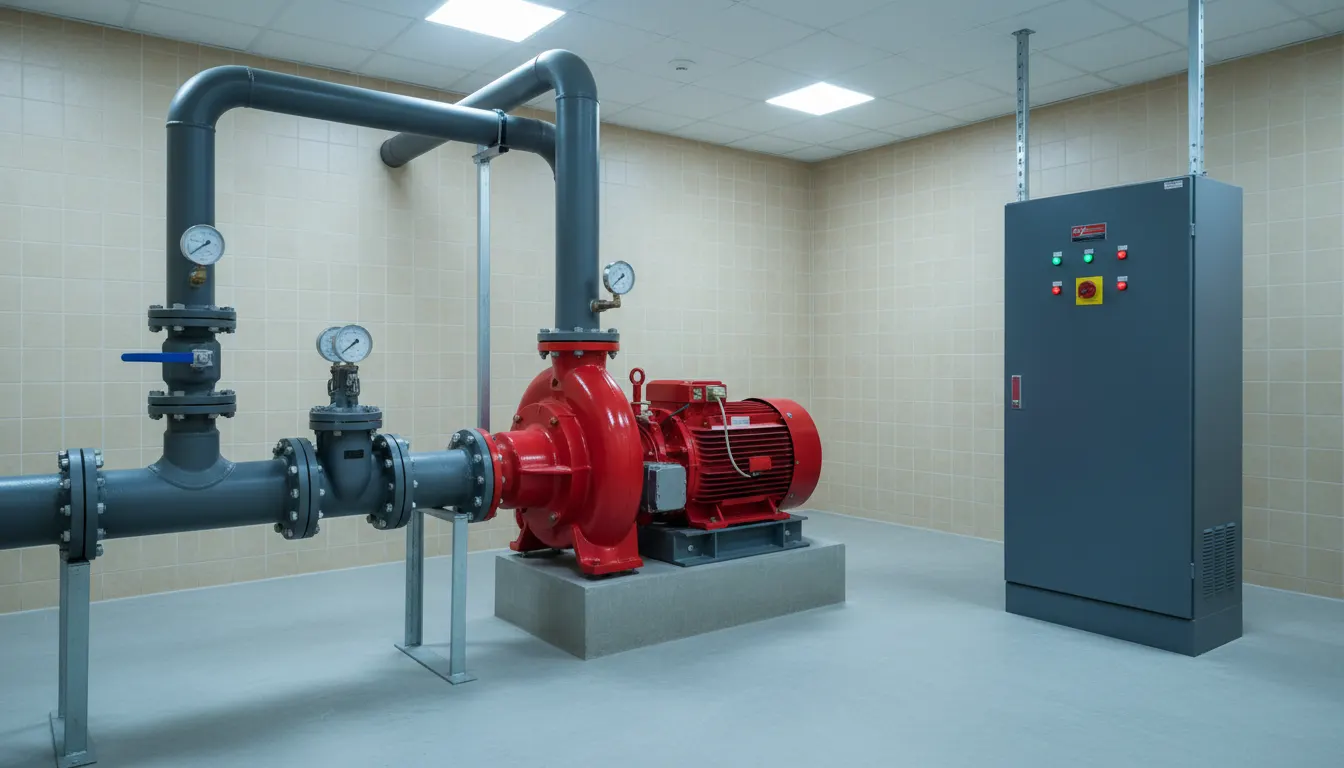
Fire pump testing: weekly and monthly runs, and the annual flow test
A fire pump is run on a routine schedule without flowing water (weekly for diesel, and monthly for most electric pumps), and once a year it's flow tested at no flow, at its rated capacity and at 150% of it, with the results compared against the pump's original curve.
Read the guide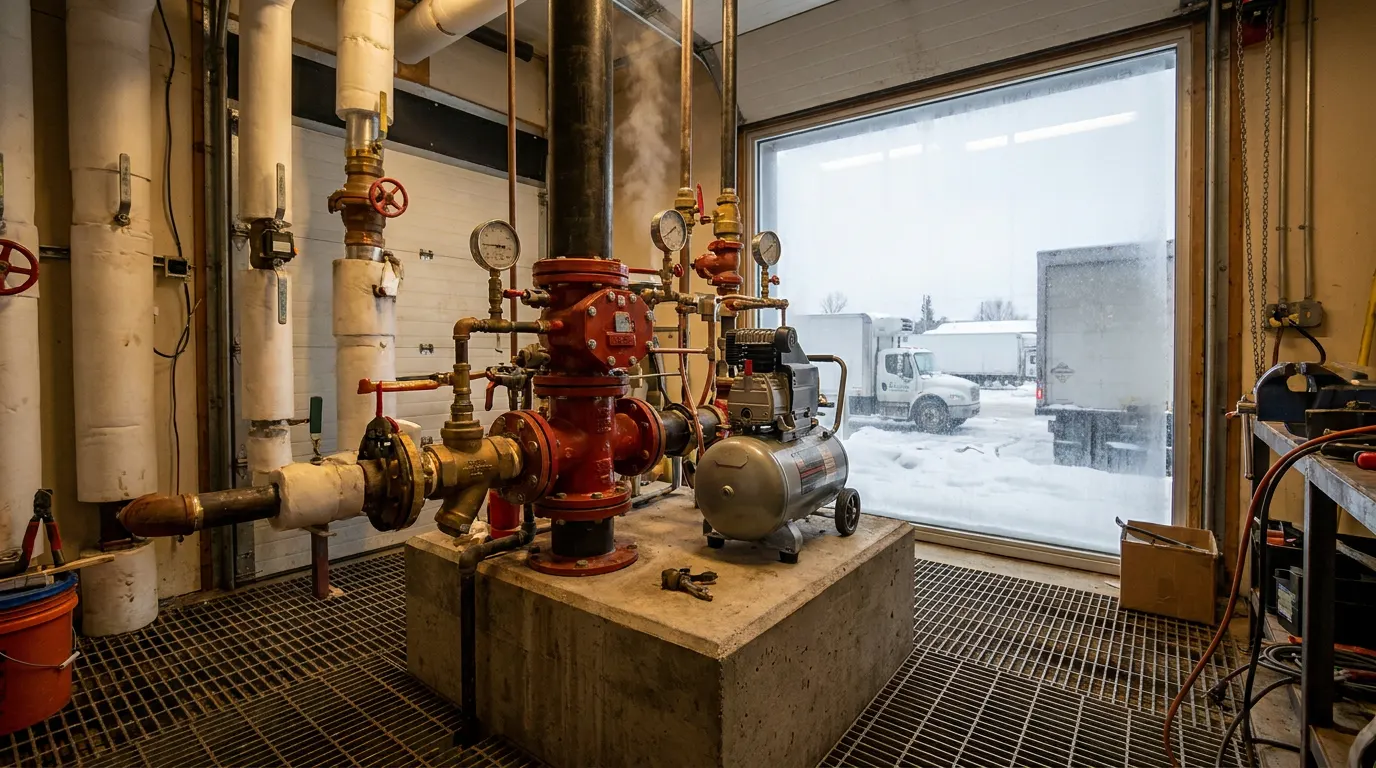
Getting a dry-pipe sprinkler system ready for winter
Before the first hard freeze, drain the low points on a dry-pipe system, confirm the valve room stays at 40°F or above, and check that the air pressure and alarms are right. Most dry-system freeze breaks come from water left in the pipe.
Read the guide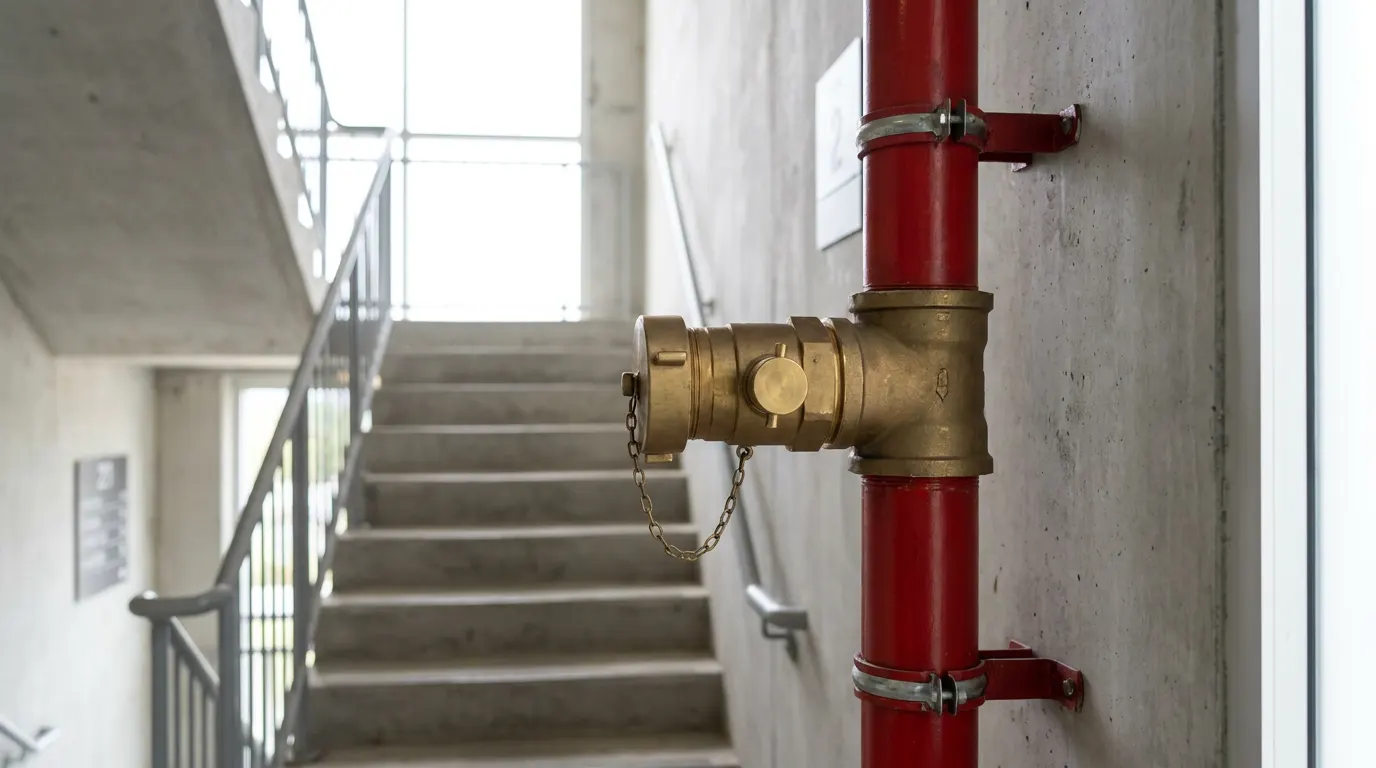
Standpipe inspection and testing: hose valves, pressure regulators and the five-year tests
Standpipes, the hose connections in stairwells of multi-story buildings, get regular inspections of their valves and hose connections, flow tests of their pressure-regulating valves, and a flow test (and for dry standpipes a hydrostatic test) every five years.
Read the guide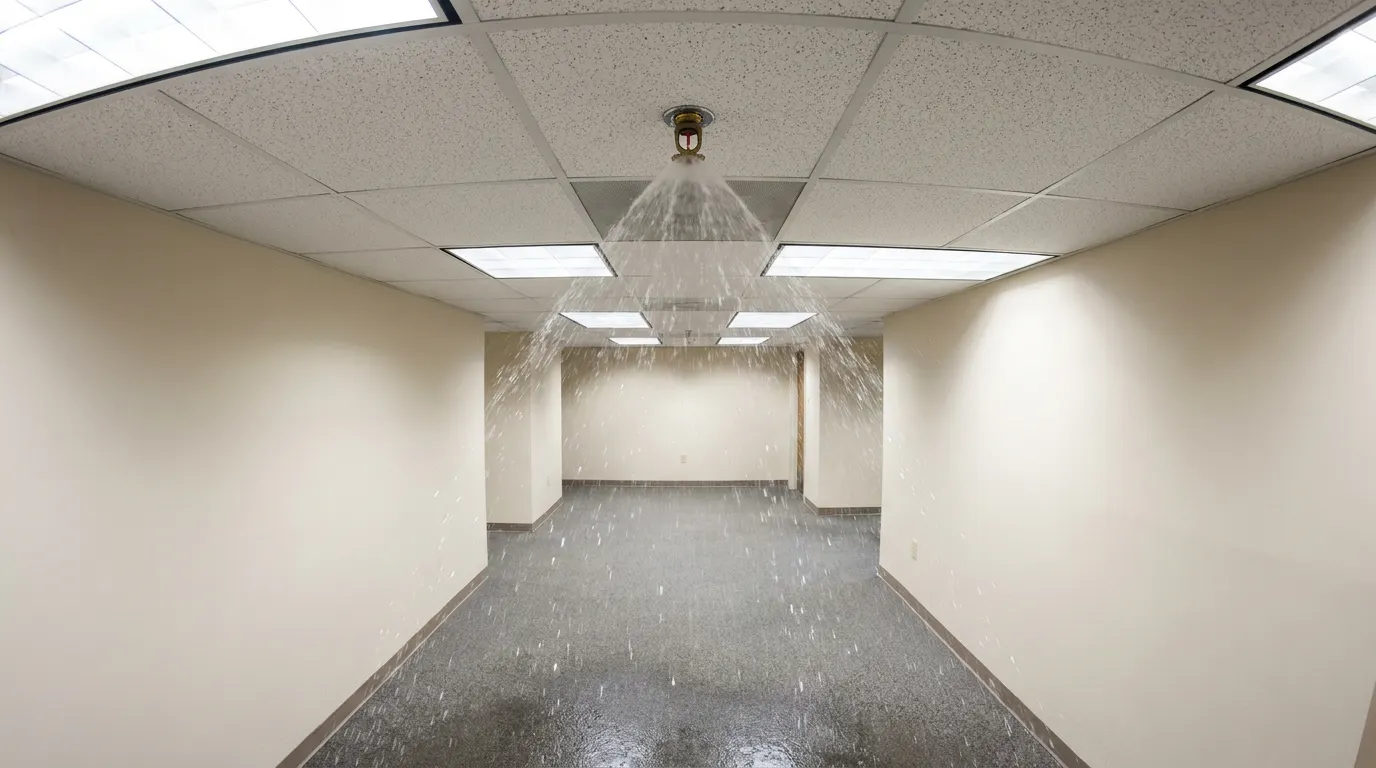
A sprinkler head went off or is leaking: what to do now
If there's any sign of fire, call 911 and leave the water on. If there isn't, shut the system's control valve, call your alarm company and a sprinkler contractor, and keep a fire watch until the system is back in service. The head has to be replaced with a matching one; it can't be reset.
Read the guide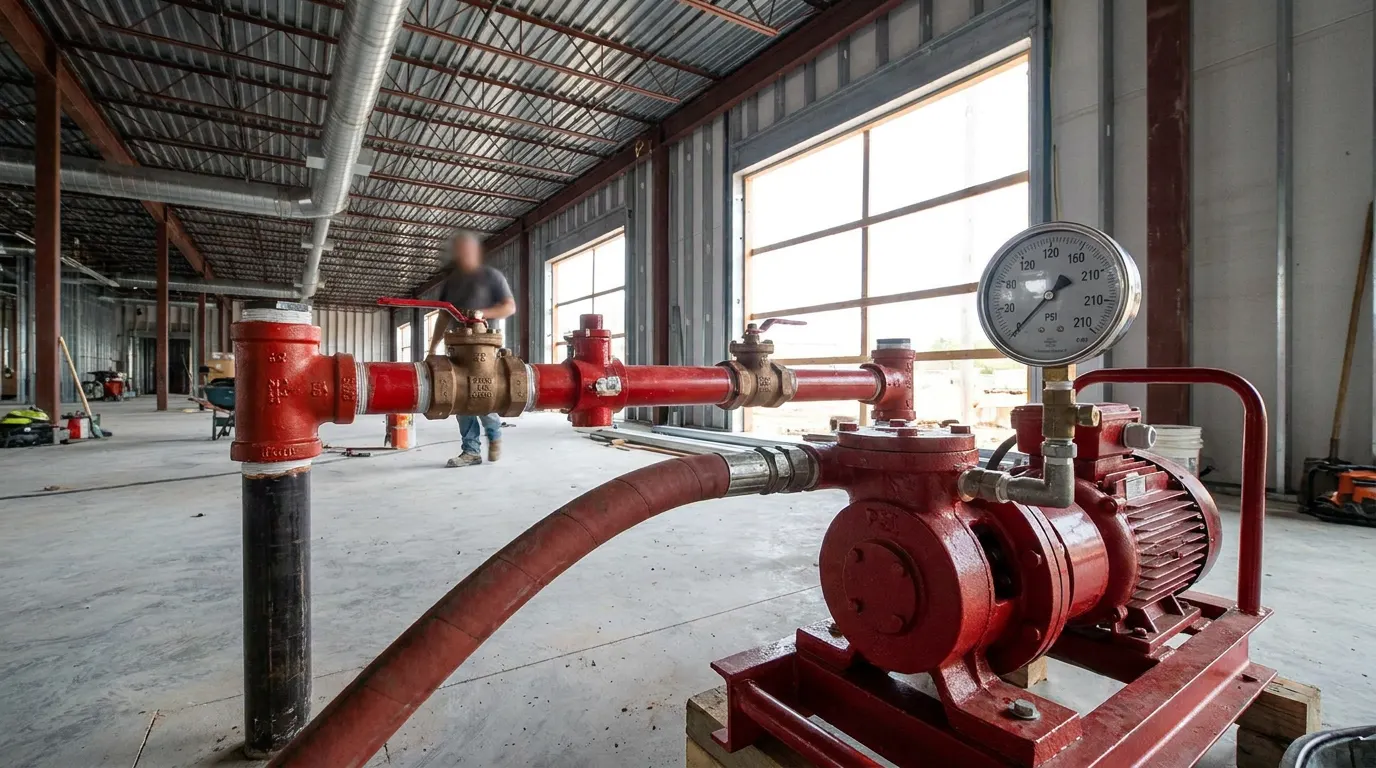
Acceptance testing a new fire sprinkler system: what happens before occupancy
Before a new sprinkler system is accepted, the underground is flushed, the piping is hydrostatically tested, the alarms, drains and any dry or pump equipment are tested, and the results go on the contractor's material and test certificates for the fire marshal and owner.
Read the guide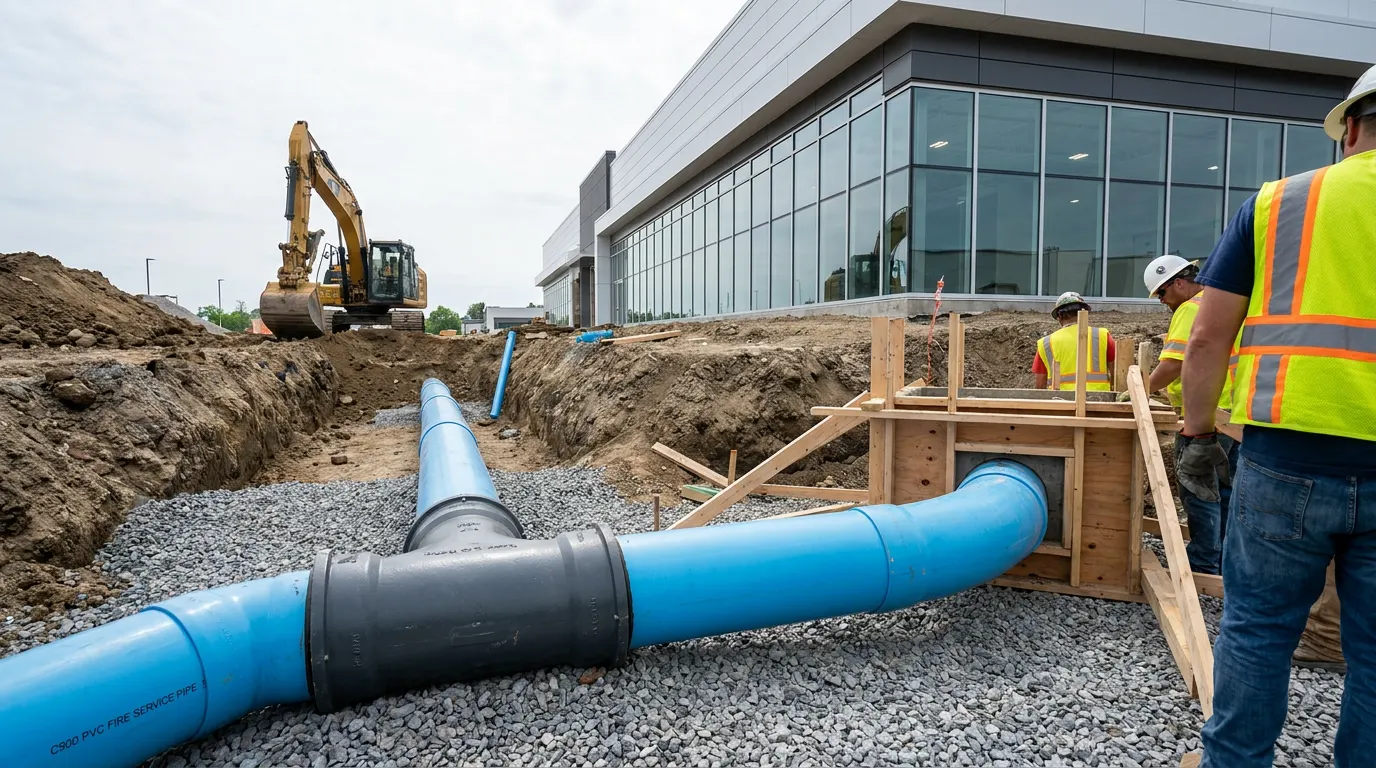
Underground fire service mains: what's involved in installing one
An underground fire main carries water from the public main to the building's sprinkler riser. It's installed to NFPA 24, with the right pipe, depth and restraint, control valves and a backflow preventer, then flushed and pressure tested before it's connected.
Read the guide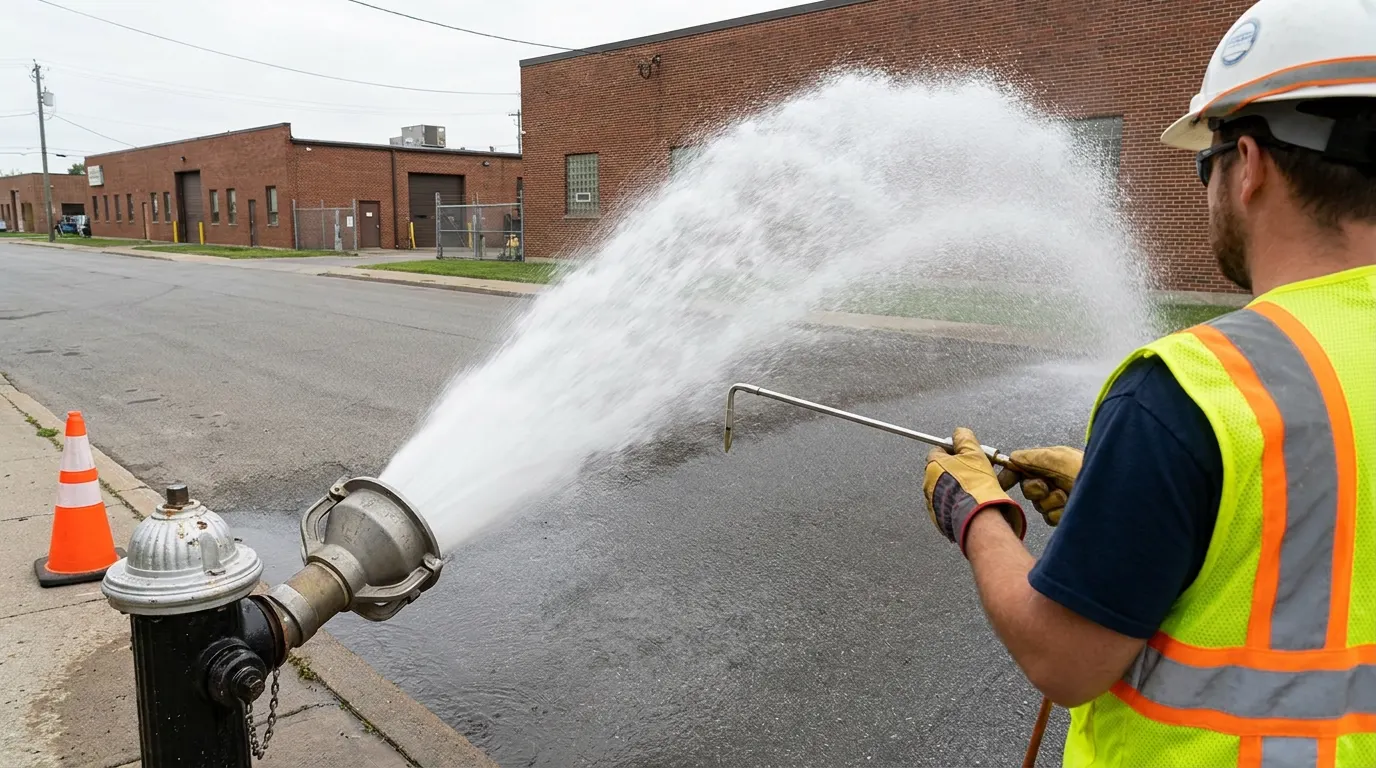
Fire flow tests: how we find out what the water supply can do
A fire flow test measures how much water the public main can deliver and at what pressure, using one hydrant to read pressure and another to flow water. Every sprinkler design is checked against that result, so it needs to be recent and done near the site.
Read the guide
NFPA 13, 13R or 13D: which sprinkler standard a building needs
NFPA 13 covers every kind of building and protects both people and property. NFPA 13R is a lighter standard for low-rise residential buildings like apartments and some hotels, and 13D is for one- and two-family homes. The building code and the occupancy decide which is allowed.
Read the guide