Backflow testing on fire sprinkler lines: who requires it, and what it involves
If your fire sprinkler line has a backflow preventer, your water utility almost certainly requires it to be tested once a year by a certified tester, with the results sent to them. NFPA 25 also asks for an annual forward-flow test of the same device.
Why fire lines have backflow preventers
Water sitting in sprinkler pipe for years picks up rust, sediment and sometimes antifreeze or other additives. A backflow preventer keeps that water from being pulled back into the public supply if pressure in the main drops, for example during a water main break or when the fire department draws heavily from a hydrant.
Most fire lines have a double check valve assembly. Systems with antifreeze or other chemicals, or with a fire department connection near a non-potable source, may need a reduced pressure zone (RPZ) assembly instead. The water utility decides which is required.
Who requires the test
Public water systems run cross-connection control programs under their state's drinking water rules. Your water utility's cross-connection program will typically require testable backflow assemblies to be tested when installed, after repairs, and at least once a year, by a tester certified in your state or approved by the utility. Each utility keeps its own records and sends its own notices, so the deadline, the approved testers and the paperwork can differ from one town to the next.
Separately, NFPA 25 asks for an annual forward-flow test of the backflow preventer at the system's design flow, to make sure the device doesn't choke the water supply the sprinklers need. We do both in the same visit where we can.
What the test involves
- We tell you the time window; the fire sprinkler system is briefly out of service while the assembly is shut down, so we coordinate with the building and the alarm company.
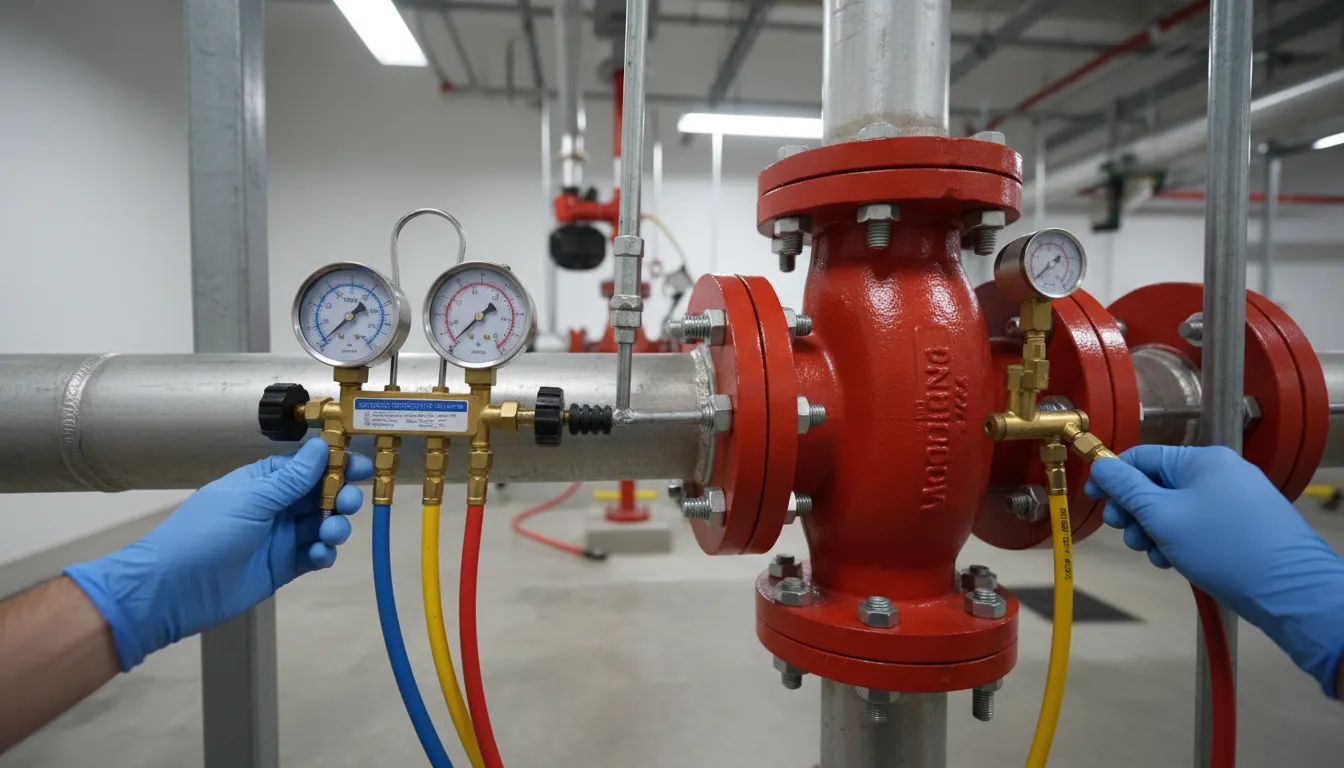
- Test gauges go on the assembly's test cocks to check each check valve holds and, on an RPZ, that the relief valve opens at the right point.
- If a check or relief valve fails, we can usually rebuild it on the spot with a repair kit, then retest.
- The results go on your water utility's test report form, and you get a copy for your records.
If you get a notice from the water utility
The notice gives a deadline. Call us with it in hand and we'll schedule the test before then, and note the next due date so next year's test is on the calendar before the notice arrives.
Questions owners ask
- How often does a fire line backflow preventer need to be tested?
- In most places at least once a year, plus after installation or any repair. Your water utility's cross-connection program sets the exact due date and sends the notice.
- Who can test a backflow preventer?
- A backflow prevention assembly tester certified in your state, or on your water utility's list of approved testers where it keeps one. Ask any tester for their current certification number; the utility will want it on the report.
- Will the sprinklers be off during the test?
- Briefly. The assembly has to be shut down to test it, so we plan the window with you and your alarm company and put the system back in service before we leave.